

Partial Solar Eclipse Crosses Northern US As Path of Totality Reaches Spain
United States
Published · Updated

Watch Live Videos
Download Citizen




Summary
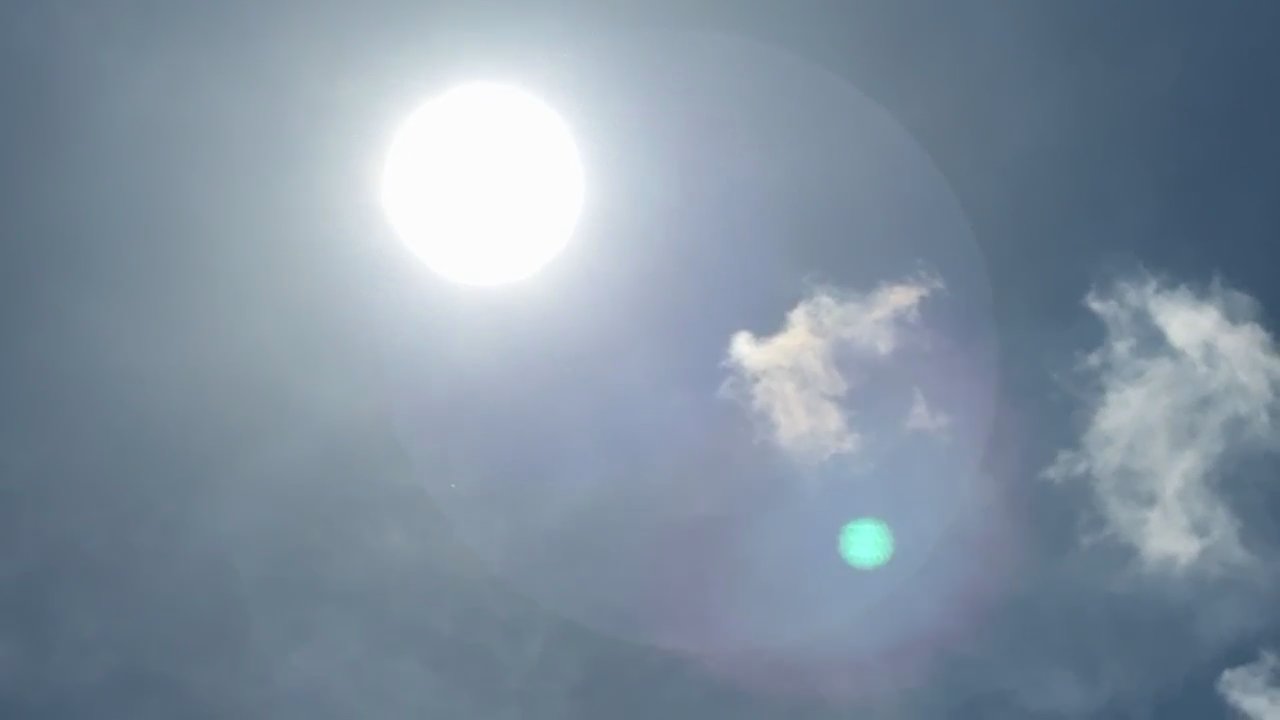
- A partial solar eclipse crossed the northern United States on Wednesday, with the moon sliding across the sun in a rare celestial event visible from roughly 26 states, according to NASA.
- NASA's live broadcast followed the total eclipse along its path, carrying feeds from telescopes and observers across Greenland, Iceland, and Spain, where the moon was set to fully cover the sun. Viewers were able to watch totality—the roughly two minutes when the sun is completely blocked and its corona becomes visible—with expert commentary at each stage.
- Skywatchers from Maine to Michigan could catch a "bite" taken out of the sun on Wednesday afternoon, though the view came with a hard rule: it is never safe to directly look at a partially eclipsed or uneclipsed sun without proper eye protection.
- The eclipse was only partial in the US—the moon covered a fraction of the sun, not all of it. The path of totality, where the sun is fully blocked, passed over Greenland, Iceland, and northern Spain, not North America.
- Timing ran west to east through the day. Alaska's eclipse occurred in the morning and ended first. In the contiguous US, the partial eclipse began around midday, peaking in the Midwest near midday local time and the Northeast around 1:50 to 1:55 p.m. EDT, before ending in the midafternoon.
- Approximate peak times, local:
- Montana — ~11:40 a.m.
- Minnesota, North Dakota, Wisconsin — ~12:40–12:45 p.m.
- Michigan — ~1:36 p.m.
- Pennsylvania, Washington, D.C. — ~1:53 p.m.
- New York — ~1:54 p.m.
- Maine, New Hampshire, Vermont, Massachusetts, Rhode Island, Connecticut, New Jersey — ~1:50–1:55 p.m.
- In the US, the deepest coverage was across the far north: about 24% in northern Maine and up to 37% earlier in the morning in Alaska, tapering to roughly 9% in New York, 7% in Pennsylvania, and just a few percent across the northern Midwest and Mountain states. Most of the country—the South, Southwest, and West—sees little or nothing.
- Because the sun was never fully covered anywhere in the US, there was no moment when it is safe to look at it with unprotected eyes. Viewers must use ISO 12312-2 eclipse glasses or a handheld solar viewer for the entire event—ordinary sunglasses, no matter how dark, do not provide protection.
- Do not look at the sun through a camera, telescope, or binoculars, even while wearing eclipse glasses—the concentrated light can burn through the filter and cause serious eye injury; optics need a dedicated solar filter mounted on the front. If you don't have eclipse glasses, use an indirect method instead: a pinhole projector casts the sun's image onto a surface, and the dappled shadows under a leafy tree do the same thing naturally. Looking directly at even a partially eclipsed sun without proper protection can cause permanent eye damage.
Timeline
NASA's livestream showed totality hitting Spain around 2:29 ET.
The address reported for this incident has changed to United States.
NASA has a livestream showing the path of totality through Iceland, Greenland, Russia, and Spain.
Approximate peak times, local: - Montana — ~11:40 a.m. - Minnesota, North Dakota, Wisconsin — ~12:40–12:45 p.m. - Michigan — ~1:36 p.m. - Pennsylvania, Washington, D.C. — ~1:53 p.m. - New York — ~1:54 p.m. - Maine, New Hampshire, Vermont, Massachusetts, Rhode Island, Connecticut, New Jersey — ~1:50–1:55 p.m.
Peak coverage reaches the Northeast around 1:50–1:55 p.m. EDT; the Midwest and Mountain states peak earlier, around midday local time.
It is never safe to look at the sun with bare eyes today—there is no total eclipse anywhere in the US, so certified ISO 12312-2 eclipse glasses are required the entire time. Ordinary sunglasses do not work.
A partial solar eclipse is occurring across the northern US, with the moon covering a slice of the sun. It's visible from roughly 26 northern and northeastern states; most of the country will see little or nothing.
Incident reported at Northeastern United States.
NASA's livestream showed totality hitting Spain around 2:29 ET.
The address reported for this incident has changed to United States.
NASA has a livestream showing the path of totality through Iceland, Greenland, Russia, and Spain.
Approximate peak times, local: - Montana — ~11:40 a.m. - Minnesota, North Dakota, Wisconsin — ~12:40–12:45 p.m. - Michigan — ~1:36 p.m. - Pennsylvania, Washington, D.C. — ~1:53 p.m. - New York — ~1:54 p.m. - Maine, New Hampshire, Vermont, Massachusetts, Rhode Island, Connecticut, New Jersey — ~1:50–1:55 p.m.
Peak coverage reaches the Northeast around 1:50–1:55 p.m. EDT; the Midwest and Mountain states peak earlier, around midday local time.
It is never safe to look at the sun with bare eyes today—there is no total eclipse anywhere in the US, so certified ISO 12312-2 eclipse glasses are required the entire time. Ordinary sunglasses do not work.
A partial solar eclipse is occurring across the northern US, with the moon covering a slice of the sun. It's visible from roughly 26 northern and northeastern states; most of the country will see little or nothing.
Incident reported at Northeastern United States.
NASA's livestream showed totality hitting Spain around 2:29 ET.
The address reported for this incident has changed to United States.
NASA has a livestream showing the path of totality through Iceland, Greenland, Russia, and Spain.
Approximate peak times, local: - Montana — ~11:40 a.m. - Minnesota, North Dakota, Wisconsin — ~12:40–12:45 p.m. - Michigan — ~1:36 p.m. - Pennsylvania, Washington, D.C. — ~1:53 p.m. - New York — ~1:54 p.m. - Maine, New Hampshire, Vermont, Massachusetts, Rhode Island, Connecticut, New Jersey — ~1:50–1:55 p.m.
Peak coverage reaches the Northeast around 1:50–1:55 p.m. EDT; the Midwest and Mountain states peak earlier, around midday local time.
It is never safe to look at the sun with bare eyes today—there is no total eclipse anywhere in the US, so certified ISO 12312-2 eclipse glasses are required the entire time. Ordinary sunglasses do not work.
A partial solar eclipse is occurring across the northern US, with the moon covering a slice of the sun. It's visible from roughly 26 northern and northeastern states; most of the country will see little or nothing.
Incident reported at Northeastern United States.
NASA's livestream showed totality hitting Spain around 2:29 ET.
The address reported for this incident has changed to United States.
NASA has a livestream showing the path of totality through Iceland, Greenland, Russia, and Spain.
Approximate peak times, local: - Montana — ~11:40 a.m. - Minnesota, North Dakota, Wisconsin — ~12:40–12:45 p.m. - Michigan — ~1:36 p.m. - Pennsylvania, Washington, D.C. — ~1:53 p.m. - New York — ~1:54 p.m. - Maine, New Hampshire, Vermont, Massachusetts, Rhode Island, Connecticut, New Jersey — ~1:50–1:55 p.m.
Peak coverage reaches the Northeast around 1:50–1:55 p.m. EDT; the Midwest and Mountain states peak earlier, around midday local time.
It is never safe to look at the sun with bare eyes today—there is no total eclipse anywhere in the US, so certified ISO 12312-2 eclipse glasses are required the entire time. Ordinary sunglasses do not work.
A partial solar eclipse is occurring across the northern US, with the moon covering a slice of the sun. It's visible from roughly 26 northern and northeastern states; most of the country will see little or nothing.
Incident reported at Northeastern United States.
NASA's livestream showed totality hitting Spain around 2:29 ET.
The address reported for this incident has changed to United States.
NASA has a livestream showing the path of totality through Iceland, Greenland, Russia, and Spain.
Approximate peak times, local: - Montana — ~11:40 a.m. - Minnesota, North Dakota, Wisconsin — ~12:40–12:45 p.m. - Michigan — ~1:36 p.m. - Pennsylvania, Washington, D.C. — ~1:53 p.m. - New York — ~1:54 p.m. - Maine, New Hampshire, Vermont, Massachusetts, Rhode Island, Connecticut, New Jersey — ~1:50–1:55 p.m.
Peak coverage reaches the Northeast around 1:50–1:55 p.m. EDT; the Midwest and Mountain states peak earlier, around midday local time.
It is never safe to look at the sun with bare eyes today—there is no total eclipse anywhere in the US, so certified ISO 12312-2 eclipse glasses are required the entire time. Ordinary sunglasses do not work.
A partial solar eclipse is occurring across the northern US, with the moon covering a slice of the sun. It's visible from roughly 26 northern and northeastern states; most of the country will see little or nothing.
Incident reported at Northeastern United States.
Stay up-to-date
Download CitizenComments30

Time to melt my eyeballs

Too late alr looked at it

Will Trump look directly at it again with no protective eyewear?

Probably 😂
I hope everybody enjoyed the solar eclipse

Hahah
Time to melt my eyeballs
Too late alr looked at it
Will Trump look directly at it again with no protective eyewear?
Probably 😂
I hope everybody enjoyed the solar eclipse
Hahah
Time to melt my eyeballs
Too late alr looked at it
Will Trump look directly at it again with no protective eyewear?
Probably 😂
I hope everybody enjoyed the solar eclipse
Hahah
Time to melt my eyeballs
Too late alr looked at it
Will Trump look directly at it again with no protective eyewear?
Probably 😂
I hope everybody enjoyed the solar eclipse
Hahah
Stay informed on local incidents
Download Citizen



Time to melt my eyeballs
Too late alr looked at it
Will Trump look directly at it again with no protective eyewear?
Probably 😂
I hope everybody enjoyed the solar eclipse
Hahah